
What is Low Voltage Ride Through (LVRT)
Low Voltage Ride Through (LVRT) means the ability of a power plant to stay connected to the grid during a voltage dip.
Voltage dips happen due to grid faults, short circuits, or switching operations.
These events are temporary, but they can reduce the grid voltage for a short time.
If generators disconnect during such events, it may cause power loss and system instability.
LVRT avoids this problem.
Why LVRT is Required
Modern power systems have a high share of renewable energy sources like solar PV, wind, and BESS. These plants are connected through power electronic converters, which are sensitive to voltage disturbances.
Grid codes therefore mandate LVRT to:
Maintain grid stability during faults
Prevent cascading tripping of generating units
Support faster system recovery after faults
Ensure reliable operation of renewable-rich grids
Without LVRT, even a temporary voltage dip could disconnect large generation capacity.
How LVRT Works
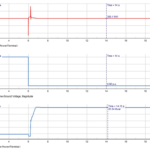
When a voltage dip occurs:
Grid voltage reduces suddenly.
The plant does not disconnect.
Active power may reduce temporarily.
The plant injects reactive current to support voltage.
Normal operation resumes after voltage recovery.
This function is controlled by the inverter or plant controller.
LVRT Curve
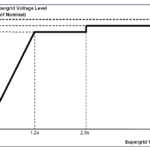
LVRT requirements are usually represented using a voltage versus time curve:
The vertical axis shows voltage (per unit)
The horizontal axis shows time (seconds)
The curve defines:
The minimum voltage level the plant must withstand
The maximum duration it must remain connected at that voltage
Typical LVRT Requirements
| Voltage Level (p.u.) | Minimum Ride-Through Time |
|---|---|
| 0.0 – 0.15 | 100–150 ms |
| 0.15 – 0.9 | 0.5–3.0 seconds |
| ≥ 0.9 | Continuous operation |
Conclusion
LVRT ensures that power plants remain connected during voltage dips.
It also protects the grid from sudden generation loss during short fault events.
With higher renewable penetration, LVRT compliance is essential for safe and reliable grid operation.