What is Fault Ride-Through (FRT)
Fault Ride Through (FRT) Study is performed to verify the ability of power plants to remain connected to the grid during voltage disturbances. This Fault Ride Through (FRT) Study ensures compliance with grid code requirements and supports stable system operation.
Fault Ride-Through (FRT) means the ability of a power plant to stay connected to the grid during a fault.
A fault can be:
Short circuit
Voltage dip
Voltage swell
Earlier, generators were allowed to trip during faults.
Now, due to high renewable penetration, grid codes do not allow immediate disconnection.
The plant must:
Remain connected
Support the grid
Recover smoothly after the fault
Why is FRT Study Required
If many generators trip during a fault, it can cause:
Grid instability
Frequency drop
Large-scale blackout
Types of Fault Ride-Through
Low Voltage Ride-Through (LVRT)
LVRT checks whether the plant can withstand voltage dip during a fault.
Typical conditions:
Voltage drops to very low level
Fault lasts for a short duration
The plant should:
Not trip
Inject reactive current
Recover after fault clearance
High Voltage Ride-Through (HVRT)
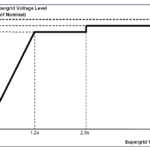
HVRT checks plant behavior during voltage rise.
Voltage rise may occur due to:
Fault clearing
Sudden load rejection
The plant should:
Stay connected
Avoid overvoltage tripping
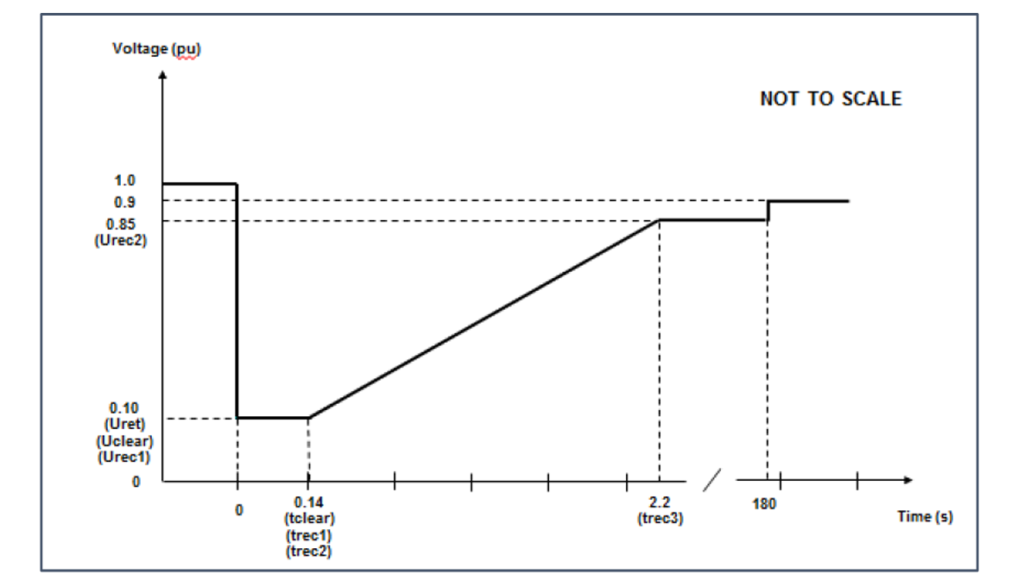
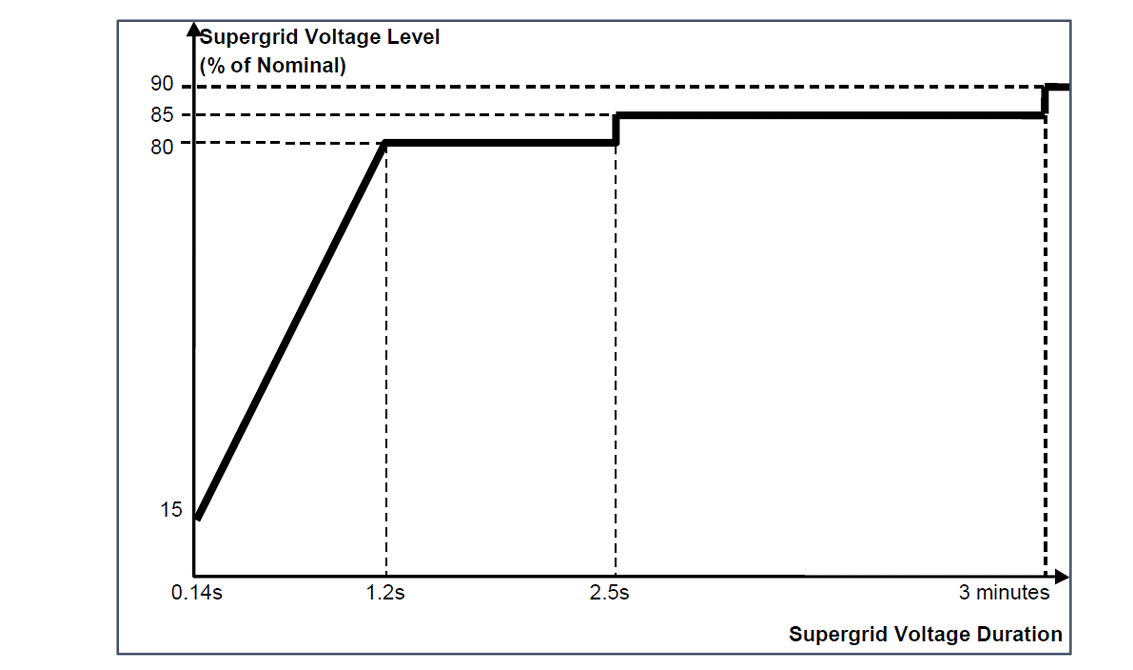
What are FRT Curves?
Grid codes define voltage versus time curves.
These curves show:
How low voltage can go
How long the plant must stay connected
When disconnection is allowed
During the study, the plant response must remain inside the FRT curve.
Conclusion
Fault Ride-Through (FRT) study is very important for modern power plants.
It ensures that:
The plant supports the grid
Grid code requirements are met
The project gets approval smoothly
In addition, the study reviews plant response during symmetrical and unsymmetrical faults and verifies recovery of active and reactive power after fault clearance. The results help utilities and developers confirm grid stability, protection coordination, and secure operation under disturbance conditions.