
UNDERGROUND CABLE SIZING AND VOLTAGE DROP CALCULATION PART -I
Introduction: Cable (or conductor) sizing is the process of selecting appropriate sizes for electrical power cable conductors. The proper sizing of cables is important to ensure that the cable can: Operate continuously under full load without being damaged Provide the load with a suitable voltage (and avoid excessive voltage drops) Withstand the worst short circuits […]
POWER QUALITY & MITIGATION PART -II
6. Voltage Flicker The variations range from 0.1% to 7% of nominal voltage with frequencies less than 25 Hz. Subsequently, the most important effect of this power quality problem is the variation in the light output of various lighting sources, commonly termed as Flicker. This is the impression of instability of the visual sensation brought about by a light stimulus, […]
POWER QUALITY & MITIGATION PART -I
1. Introduction The Proliferation of Personal Computers (PCs), Programmable Logic Controllers (PLCs), Energy Management Systems (EMS), Microprocessor based instrumentation, and other state-of-the-art electronic devices in an industrial plant setting has prompted a new awareness of the impact of Power Line Disturbances (PLD) on the reliability of these systems and the ability to perform the desired […]
DISTANCE PROTECTION PART -IV

Hybrid POTT GE Called a scheme with ECHO logic and Reverse looking elements as Hybrid scheme. SEL calls this POTT scheme Directional Comparison Unblocking Scheme DCUB This is a permissive scheme (POTT) Uses frequency shift carrier communication Since the signal is transmitted on a faulted line, the tripping is permitted for 150ms if the carrier […]
DISTANCE PROTECTION PART – III
Errors in line impedance measurement Instrument transformer Errors CT errors and PT errors Relay design tolerance Line impedance calculation errors Relay with reach setting ZAB for line between stations A & B may operate for faults beyond bus B The relay is set to operate without any delay for faults up to 80-85% of […]
DISTANCE PROTECTION PART-II
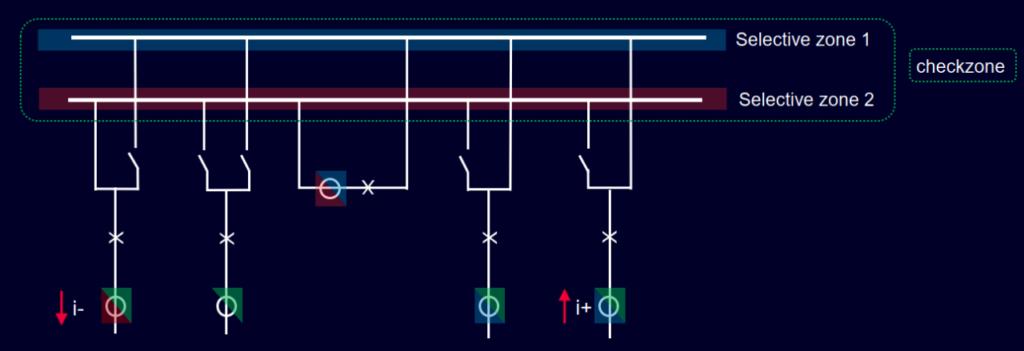
Relay Design The relay compares phase angle between two voltage signals The relay design is analyzed in next few slides by considering following three fault conditions F1- fault beyond the relay reach F2 – fault inside the relay reach F3- fault behind the relay location- reverse fault The relay operates and trips (opens CB) […]
DISTANCE PROTECTION PART – I
Transmission lines transports power from generating stations to load centre substations Transmission lines operate typically from 33 kV lines up to 1100kV Underground solid dielectric cables operate from lower voltages to sub transmission levels of 33 kV and higher voltages of say up to 230 kV Oil filled cables operate up to 500 kV […]
RELAY COORDINATION PART -III
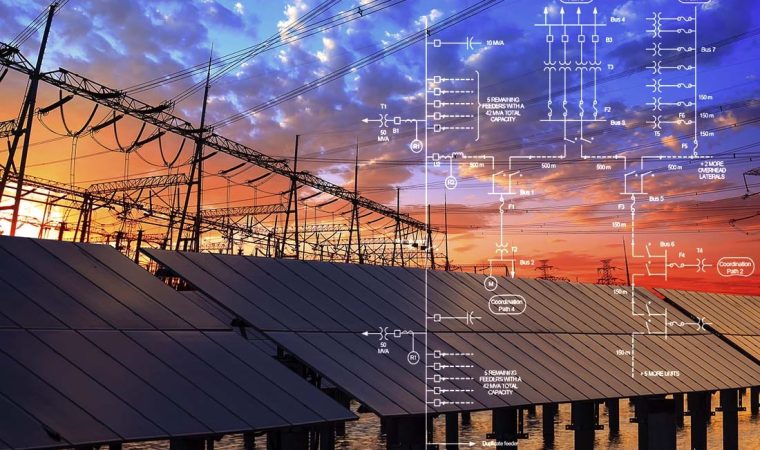
Relay Coordination – Part 3 This part explains coordination of transformer and motor protection in power systems.Proper coordination ensures selective fault clearance and safe operation. Need for Protection Coordination Transformers and motors are critical equipment in electrical systems.Any fault or abnormal condition can cause serious damage. Therefore, protection must be properly coordinated with upstream and […]
RELAY COORDINATION STUDY PART -II
Introduction In Relay Coordination – Part 1, basic feeder protection devices were discussed. In this part, overcurrent relays and coordination principles are explained in detail. Relay coordination is required to ensure that only the faulty section is isolated. As a result, the healthy part of the system remains in service. Overcurrent Relays An overcurrent relay […]
Relay Coordination Study Part I: Introduction and Feeder Protection
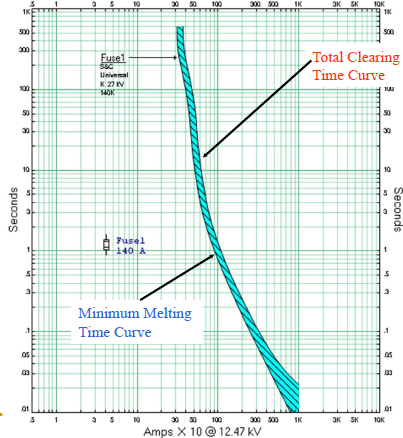
Relay Coordination Study – Introduction Relay Coordination Study is performed to ensure correct protection selectivity and grading between relays. This Relay Coordination Study helps avoid unnecessary tripping and ensures reliable fault clearance. What is Relay Coordination Study? Relay coordination is the arrangement of protection settings such that the protective device closest to the fault operates […]